Calcium Lactate
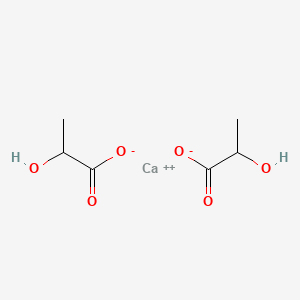
Formula: Ca(C₃H₅O₃)₂·5H₂O — Calcium 2-hydroxypropanoate, E327
Appearance: White crystalline powder
Hazard: Not classified as hazardous
Properties
White crystalline powder, more soluble than calcium carbonate. Provides calcium ions without the strong taste of calcium chloride. Preferred for culinary spherification where taste matters. Also used as a calcium supplement and food additive. The lactate ion is a natural metabolic product. Related to calcium chloride but gentler in flavor.
Historical Context
Calcium lactate emerged from 19th-century dairy science. Lactic acid, discovered in sour milk by Carl Wilhelm Scheele in 1780, was later found to be produced by bacterial fermentation of lactose. The calcium salt proved useful as a gentle calcium supplement with better taste and absorption than calcium carbonate.
The compound entered the spotlight with the molecular gastronomy movement. When chefs discovered that calcium chloride produced unpleasant bitter flavors in spherified foods, calcium lactate offered an alternative. It reacts with sodium alginate to form the same gel, but without the metallic aftertaste.
In food science terms, calcium lactate delivers calcium ions while contributing a mild, slightly tangy flavor that doesn’t dominate delicate preparations. Its slower gelation rate compared to calcium chloride also gives chefs more control over the spherification process.
Preparation
Calcium lactate can be prepared by reacting calcium carbonate (chalk or eggshell powder) with lactic acid, which is sold as a food-grade ingredient for cheese-making and brewing. Add powdered calcium carbonate a little at a time to lactic acid in warm water until fizzing stops and the mixture is no longer acidic; the calcium carbonate neutralizes the acid to form calcium lactate and carbon dioxide. Filter off any undissolved solids, then evaporate the clear solution gently until white crystals form. The product is food-grade and can be used immediately in spherification.
Experiments
Culinary Spherification: Use instead of calcium chloride for better-tasting spheres. The spherification reaction is slower, giving more control. Make fruit juice “caviar” that actually tastes good. Demonstrates that chemistry can be delicious.
Reverse Spherification: Combine with sodium alginate solution for reverse spherification - add calcium lactate to the liquid you want to spherify, then drop into alginate bath. Creates spheres with liquid centers.
Calcium Comparison: Compare spherification speed and taste using calcium chloride vs. calcium lactate. Demonstrates how different calcium sources affect reaction rates and product quality.
Experiments using this chemical:
- Food Chemistry: Spherification - Better-tasting spheres
Safety
Very low hazard — food-grade ingredient.
Incompatible with: Sodium alginate solutions (gel formation — the intended reaction in spherification); strong acids; strong oxidisers