Chrome Oxide
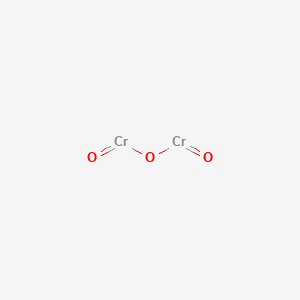
Formula: Cr₂O₃ — Chromium(III) oxide, chromia, chrome green, Guignet’s green
Molar mass: 151.99 g/mol
Appearance: Fine dark-green powder
Hazard: Irritant · Insoluble — avoid dust inhalation
Summary
Extremely fine dark-green powder with exceptional physical and chemical stability. One of the hardest oxides (Mohs hardness ~8–9), making it an outstanding polishing abrasive. Virtually insoluble in water, acids, and bases under normal conditions — this chemical inertness is what makes it such a permanent pigment. Melting point 2435°C. Does not fade, bleach, or react with atmospheric pollutants. Distinct from toxic chromium(VI) compounds (chromic acid, dichromates); Cr(III) compounds are far less hazardous.
History
Chromium was discovered in 1798 by the French chemist Louis Nicolas Vauquelin in a Siberian mineral (now called crocoite, PbCrO₄). He isolated both the orange lead chromate and metallic chromium, and noted that chromium produced a wide range of colors in different oxidation states — he named the element after the Greek chroma, color.
Chrome oxide green was first produced commercially in the 1860s by reducing sodium dichromate with sulfur. It immediately became prized by artists as one of the most lightfast greens available — unlike the copper-based “emerald greens” and malachite that slowly darkened or reacted with sulfur compounds in the air, chrome oxide was essentially indestructible. It became the standard green for military camouflage paints in the 20th century, for railway and industrial coatings, and for currency printing inks.
The polishing use exploits the hardness and fine particle size: chromium oxide powder, often pressed into a wax stick (sold as “green compound” or “chromium oxide stropping compound”), is applied to leather strops and used to bring blades and metal surfaces to a mirror finish — the final step in traditional knife sharpening.
Experiments
Pigment Permanence Test: Mix a small amount of chrome oxide with a binder (linseed oil, gum arabic, or white glue) to make green paint. Also mix an organic green dye or powdered plant material. Paint both onto paper and expose to direct sunlight for several days. Chrome oxide remains unchanged; the organic color fades. This directly demonstrates why inorganic pigments dominated artist palettes for centuries.
Metal Polishing: Apply a tiny amount of chrome oxide to a leather strop (or cork or felt). Use it to polish a steel surface or inexpensive blade with light pressure. The Cr₂O₃ particles — harder than steel — abrade microscopic burrs from the metal surface, producing a mirror finish. Compare the before and after surface under a magnifying glass.
Color Comparison Across Oxidation States: Compare the dark green Cr₂O₃ (Cr³⁺) with potassium dichromate K₂Cr₂O₇ (Cr⁶⁺, orange-red) and chromium alum KCr(SO₄)₂·12H₂O (Cr³⁺, dark violet). The dramatic color differences across Cr³⁺ and Cr⁶⁺ illustrate why Vauquelin named this element “color.”
Experiments using this chemical:
Chrome oxide isn’t used in a listed site experiment — it’s refractory and insoluble, so (unlike soluble metal salts) it gives no useful flame-test colour. The pigment-permanence and metal-polishing demonstrations above are self-contained.
Safety
Moderate hazard — Cr(III) compounds are much less toxic than Cr(VI), but fine powder requires care.
Avoid generating and inhaling dust — use in a well-ventilated area. Wear gloves. Do not confuse with chromium(VI) compounds (chromic acid, potassium dichromate) which are highly toxic carcinogens. Chrome oxide (Cr₂O₃) is the safe form.
First aid: wash dust off the skin; rinse eyes with water. If swallowed, rinse the mouth and seek medical advice.
Incompatible with: Strong oxidisers at high temperature (can convert Cr³⁺ to toxic Cr⁶⁺); fluorine; chlorine trifluoride; strong reducing agents at high temperatures
Disposal: Cr(III) is the low-toxicity form, but collect the insoluble solid and bin it rather than washing it into waterways.