Copper Sulfate
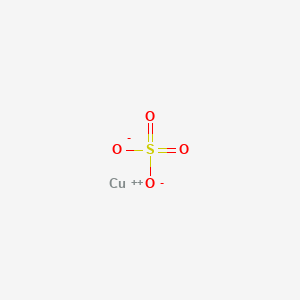
Formula: CuSO₄·5H₂O — Copper(II) sulfate pentahydrate, cupric sulfate, blue vitriol, bluestone
Molar mass: 159.61 (anhydrous); 249.69 (pentahydrate) g/mol
Appearance: Brilliant blue crystalline solid
Hazard: Harmful · Irritant · Environmental hazard
Summary
Brilliant blue crystalline solid when hydrated; white/gray when anhydrous. The blue color comes from copper coordinating with water molecules. Used in electroplating, as a fungicide, and in crystal growing. Related to other copper salts and can be converted to copper carbonate, oxide, or metal through various reactions.
History
“Blue vitriol” was known to ancient civilizations. The Egyptians used copper compounds for eye treatments (not recommended!), and medieval alchemists considered it one of the seven “vitriols” - metal sulfates essential to their work. The word “vitriol” comes from Latin vitrum (glass), describing the glassy appearance of the crystals.
Copper sulfate played a crucial role in the development of electrochemistry. In 1800, shortly after Volta1 announced his electric pile, William Cruickshank2 used copper sulfate solutions to electrodeposit copper, pioneering electroplating. John Daniell3’s 1836 battery used copper sulfate as the cathode electrolyte, providing the first reliable source of steady electrical current.
The compound saved European vineyards in the 1880s when Pierre-Marie-Alexis Millardet4 discovered that a mixture of copper sulfate and lime (Bordeaux mixture) controlled downy mildew, which was devastating French wine production.
Experiments
Crystal Growing: Grow stunning blue triclinic crystals - some of the most beautiful and easily-grown crystals. Demonstrates crystal structure, hydration, and coordination chemistry. The deep blue color comes from copper’s coordination with water molecules. Growing copper sulfate crystals
Electroplating: Use as electrolyte to copper-plate objects - connect copper electrodes to a battery with the object as cathode. Demonstrates electrochemistry and reduction-oxidation reactions. Can plate keys, coins, or other conductive objects.
Experiments using this chemical:
- The Many Colors of Copper - Eight copper compounds, eight colors
- Crystal Growing - Stunning blue triclinic crystals
- Copper Reduction - Metal displacement reaction
- Chemical Garden - Blue silicate growths
- Electroplating - Copper plating metals
- Metal Ions and Plant Pigments - Blue-green color with anthocyanins
How to get it
Copper sulfate is sold under several names — blue vitriol, bluestone, and in garden or pool supply stores as a root killer or algaecide. For experiments you want the pentahydrate form (CuSO₄·5H₂O): the brilliant blue crystals. Anhydrous copper sulfate (white powder) is less useful for most home experiments.
Lab grade vs. pool grade: Pool-supply “root killer” is typically 99%+ copper sulfate and works perfectly for crystal growing and electrochemistry. A 1–2 lb bag goes a long way.
Online: Readily available from lab chemical suppliers on Amazon. Search “copper sulfate pentahydrate lab grade.”
Buy online:
Amazon: Copper (II) Sulfate 5-Hydrate Powder, 500g — Laboratory-Grade affiliate
Safety
Moderate hazard — harmful; toxic to aquatic life.
First aid: rinse skin and eyes with water; if swallowed, rinse the mouth, drink water, and seek medical advice.
Incompatible with: Strong bases (copper hydroxide precipitation); reactive metals such as iron, zinc, magnesium (displacement reactions — the intended chemistry in some experiments); acetylene (explosive copper acetylide); hydroxylamine
Disposal: toxic to aquatic life — do not pour down the drain. Precipitate the copper with washing soda, collect the solid for hazardous-waste, then flush the clear liquid.
Footnotes
Alessandro Volta — Italian physicist (1745–1827) who invented the first battery, the voltaic pile, in 1800.↩︎
William Cruickshank — British chemist who built an early practical battery and pioneered electroplating around 1800.↩︎
John Frederic Daniell — British chemist (1790–1845) who invented the Daniell cell, the first reliable battery, in 1836.↩︎
Pierre-Marie-Alexis Millardet — French botanist (1838–1902) who created Bordeaux mixture, the first widely used fungicide.↩︎