Dextrose
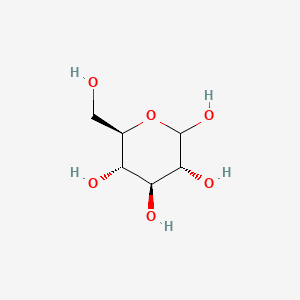
Formula: C₆H₁₂O₆ — Glucose, corn sugar, grape sugar
Molar mass: 180.16 g/mol
Appearance: White crystalline powder
Hazard: Not classified as hazardous
Summary
White crystalline powder, very soluble in water. The most important simple sugar in biology - the primary fuel for cellular respiration. Less sweet than sucrose. Fermented by yeast to produce ethanol and CO₂. Can reduce Benedict’s solution (turns blue to red/orange), showing it’s a reducing sugar. Related to fructose (same formula, different structure).
History
Glucose was first isolated from raisins in 1747 by German chemist Andreas Marggraf. The name “glucose” was coined in 1838 by Jean-Baptiste Dumas, from the Greek gleukos meaning “sweet wine.” The alternate name “dextrose” comes from the fact that glucose solutions rotate polarized light to the right (dexter = right in Latin).
The discovery that glucose is the body’s primary energy source revolutionized our understanding of metabolism. In 1856, Claude Bernard found that the liver stores glucose as glycogen and releases it as needed. Otto Warburg’s work on how cells process glucose (the Warburg effect in cancer cells) earned him the 1931 Nobel Prize.
Glucose’s role in fermentation was understood through the work of Louis Pasteur1 and Eduard Buchner. Buchner showed in 1897 that yeast enzymes, not living cells, were responsible for fermentation - work that earned the 1907 Nobel Prize and launched modern biochemistry.
The Blue Bottle reaction, developed as a teaching demonstration, perfectly illustrates glucose’s reducing power. Glucose reduces methylene blue to its colorless form; shaking reintroduces oxygen, re-oxidizing the dye to blue.
Experiments
Fermentation: Mix with warm water and baker’s yeast to demonstrate alcoholic fermentation. Capture the CO₂ produced with a balloon to show gas production. Demonstrates cellular respiration and metabolism.
Caramelization: Heat gently to demonstrate thermal decomposition and the Maillard2 reaction. The sugar melts, turns golden brown, and develops complex flavors, showing how heat breaks down and recombines sugar molecules. Caramelization science
Experiments using this chemical:
- Blue Bottle Reaction - Reversible redox indicator
- Traffic Light Reaction - Multi-color redox changes
- Silver Mirror Reaction - Reduces silver to metallic coating
- Yeast Fermentation - CO₂ production
- Food Chemistry - Fermentation and caramelization
Safety
Very low hazard — food-safe.
First aid: none needed.
Incompatible with: Strong oxidisers (combustible in large bulk quantities); concentrated sulfuric acid (charring reaction)
Disposal: harmless — rinse down the drain.
Footnotes
Louis Pasteur — French chemist (1822–1895) who discovered molecular chirality by separating tartrate crystals by hand.↩︎
Louis-Camille Maillard — French chemist (1878–1936) who described the browning reaction between sugars and amino acids.↩︎