Ferric Chloride
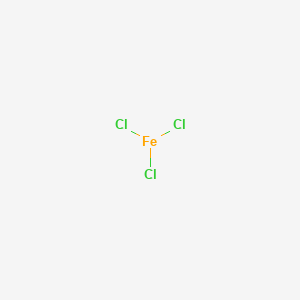
Formula: FeCl₃·6H₂O — Iron(III) chloride hexahydrate, molysite
Molar mass: 162.20 (anhydrous) g/mol
Appearance: Yellow-brown to orange crystalline solid
Hazard: Irritant · Corrosive · Harmful
Summary
Yellow-brown to orange crystalline solid, highly hygroscopic and very soluble in water. Solutions are acidic due to hydrolysis. Strong oxidizing agent. The Fe³⁺ ion forms intensely colored complexes with many ligands. Used extensively in water treatment, PCB etching, and as a mordant. Related to ferrous chloride (FeCl₂) but more oxidizing.
History
Iron chlorides were among the first iron compounds studied by early chemists. The distinction between ferrous (Fe²⁺) and ferric (Fe³⁺) salts helped establish our understanding of oxidation states. Antoine Lavoisier1 used iron chlorides in experiments that helped overturn phlogiston theory.
Ferric chloride became essential to the electronics industry. In the 1950s and 1960s, as printed circuit boards replaced point-to-point wiring, ferric chloride emerged as the preferred etchant. It dissolves copper quickly and cleanly: 2FeCl₃ + Cu → 2FeCl₂ + CuCl₂. Hobbyists and professionals alike have used this reaction millions of times to create circuit boards.
The compound’s reaction with phenolic compounds produces striking colors. When ferric chloride meets tannic acid (from tea, oak galls, or other plant sources), it forms the iron-tannate complex that gives iron gall ink its characteristic blue-black color - the same ink used by Leonardo da Vinci and Johann Sebastian Bach.
Experiments
PCB Etching: Dissolves copper metal, used to etch printed circuit boards. Demonstrates oxidation of metals: 2FeCl₃ + Cu → 2FeCl₂ + CuCl₂. Can observe the color change as Fe³⁺ (yellow) reduces to Fe²⁺ (green).
Phenol Test: Add to solutions containing phenols (like tannic acid from tea) - produces intense blue-black color. Classic test for phenolic compounds. The basis of iron gall ink chemistry.
Prussian Blue: React with potassium ferrocyanide to produce the intense Prussian blue pigment (iron(III) ferrocyanide). Demonstrates how different iron oxidation states create different colors.
Experiments using this chemical:
- The Many Colors of Iron - Fe³⁺ amber solution, hydroxide precipitate, reduction demo
- Chemical Garden - Yellow/brown/orange silicate growths
- Prussian Blue Synthesis - Intense blue pigment
- Metal Ions and Plant Pigments - Metal-pigment color changes
- Ferrofluid Synthesis - Fe³⁺ source for magnetite nanoparticles
How to get it
Ferric chloride is primarily sold as a PCB etching solution for electronics hobbyists. Both the solid (anhydrous or hexahydrate) and the ready-to-use liquid etching solution (typically ~40% by weight) work for chemistry experiments.
- Electronics suppliers (Adafruit, RadioShack, local electronics stores): stock liquid etching solution.
- Online: solid ferric chloride hexahydrate is available from chemical suppliers. The solid is more economical and easier to store.
For Prussian blue synthesis, either form works; for iron color experiments, the solid gives you better control over concentration.
Making it yourself
Ferric chloride can be prepared in two steps starting from iron and hydrochloric acid. First, dissolve steel wool or iron filings in dilute hydrochloric acid to produce a pale green ferrous chloride solution (FeCl₂): Fe + 2HCl → FeCl₂ + H₂. Then oxidize the Fe²⁺ to Fe³⁺ by adding hydrogen peroxide dropwise with stirring — the solution turns yellow-amber as ferric chloride forms: 2FeCl₂ + H₂O₂ + 2HCl → 2FeCl₃ + 2H₂O. Evaporate the solution carefully to obtain the solid hexahydrate, but note that the concentrated solution is already usable for etching copper and PCB work without isolation.
Safety
Moderate hazard — corrosive; strongly acidic.
First aid: rinse skin and eyes with plenty of water — it leaves harmless orange-brown stains that fade. Seek medical care for eye contact. If swallowed, rinse the mouth and drink water.
Incompatible with: Strong bases (Fe(OH)₃ precipitation, heat release); reactive metals (rapid displacement); reducing agents (Fe³⁺ → Fe²⁺); ethylene oxide; allyl chloride; alkali metals (violent)
Disposal: neutralize with washing soda to precipitate iron hydroxide, collect the solid, and bin it; flush the neutralized liquid. Do not pour concentrated etchant down metal drains — it corrodes them.
Footnotes
Antoine Lavoisier — French chemist (1743–1794), the ‘father of modern chemistry’, who named oxygen and hydrogen.↩︎