Potassium Phosphate
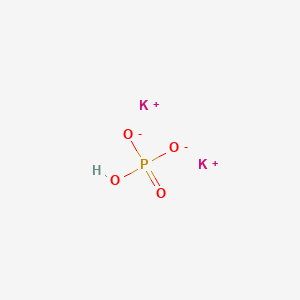
Formula: K₃PO₄ or KH₂PO₄ — Potassium phosphate (various forms)
Appearance: White crystalline solid
Hazard: Irritant
Properties
White crystalline solid available in mono-, di-, and tribasic forms. The different forms have different pH values in solution. Essential plant nutrient providing both phosphorus and potassium. Used extensively in biological buffers due to its excellent buffering capacity around pH 7. Related to sodium phosphate but with added potassium nutrition value.
Historical Context
Phosphorus was discovered in 1669 by Hennig Brand, an alchemist searching for the philosopher’s stone in human urine. The element’s name means “light-bearer” in Greek, referring to its eerie glow. Phosphate salts were later recognized as essential plant nutrients, leading to the fertilizer industry.
The importance of phosphorus in biology cannot be overstated. DNA, RNA, ATP, and cell membranes all contain phosphate groups. The phosphate buffer system is one of the body’s primary mechanisms for maintaining blood pH. Potassium phosphate buffers closely mimic biological conditions, making them standard in biochemistry laboratories.
The combination of potassium and phosphorus in one compound made potassium phosphate valuable for agriculture. Both elements are essential plant macronutrients - potassium for enzyme activation and water regulation, phosphorus for energy transfer and genetic material.
Today, potassium phosphate appears in fertilizers, food additives, and laboratory buffers. Its ability to maintain stable pH values makes it indispensable for any work with enzymes or living cells.
Experiments
Buffer Solutions: Potassium phosphate is excellent for making pH buffers, especially for biological experiments. Mix monobasic and dibasic forms to create buffers at different pH values, demonstrating the Henderson-Hasselbalch equation.
Plant Growth: Use as a phosphorus and potassium fertilizer to demonstrate nutrient requirements for plant growth. Set up controlled experiments comparing plant growth with and without phosphate supplementation.
Experiments using this chemical:
- Buffer solutions for biological experiments
Safety
Low hazard — food-safe buffer salt.
Incompatible with: Strong oxidisers; strong acids; calcium and magnesium salts (insoluble calcium/magnesium phosphate precipitates)