Sodium Chloride
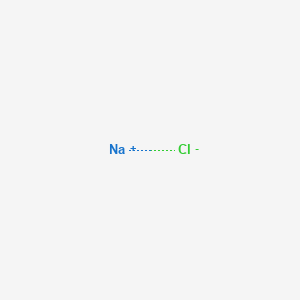
Formula: NaCl — Table salt, halite, rock salt
Molar mass: 58.44 g/mol
Appearance: White crystalline solid
Hazard: Not classified as hazardous
Summary
White crystalline solid, highly soluble in water. The most common salt, essential for life. Ionic compound forming cubic crystals. Melts at 801°C. Related to other alkali metal chlorides like KCl but with different flame test colors.
History
Salt has shaped human civilization like few other substances. The word “salary” derives from salarium, the salt allowance given to Roman soldiers. Ancient trade routes like the Via Salaria connected salt sources to major cities. Wars have been fought over salt deposits, and salt taxes (like the French gabelle) sparked revolutions.
Chemically, sodium chloride was one of the first compounds analyzed. Humphry Davy1 isolated sodium metal from molten sodium chloride in 1807 using electrolysis, proving that “common salt” was a compound of two elements. The cubic crystal structure of NaCl became a foundational example in X-ray crystallography when the Braggs determined it in 1913.
Experiments
Crystal Growing: Grow beautiful cubic salt crystals by dissolving salt in hot water until saturated, then slowly evaporating. The crystals form perfect cubes demonstrating crystal lattice structure. Tutorial
Electrolysis: Dissolve salt in water and use graphite electrodes to split water into hydrogen and oxygen gases through electrolysis. This demonstrates electrochemistry and the decomposition of water. Be careful - chlorine gas may also be produced.
Experiments using this chemical:
- Crystal Growing - Grow cubic salt crystals
- Water Electrolysis - Split water into hydrogen and oxygen
- Fractional Crystallization - Separate salt mixtures
- Flame Tests - Yellow flame color
- Halide Precipitation - White AgCl precipitate
Safety
Very low hazard — table salt.
First aid: none needed; rinse eyes with water if needed.
Incompatible with: Concentrated sulfuric acid in the presence of an oxidiser (chlorine gas generation — do not combine with strong acids and oxidisers); lithium metal (violent)
Disposal: harmless in small amounts — rinse down the drain (avoid dumping large volumes of brine into gardens or waterways).
Footnotes
Humphry Davy — British chemist (1778–1829) who used electrolysis to isolate sodium, potassium, and other elements.↩︎