Xanthan Gum
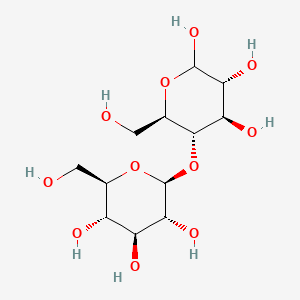
Formula: (C₃₅H₄₉O₂₉)ₙ — Xanthan, E415
Molar mass: polysaccharide — n/a g/mol
Appearance: Off-white powder
Hazard: Not classified as hazardous
Summary
Off-white powder produced by bacterial fermentation. Creates highly viscous solutions at low concentrations. Stable across wide pH and temperature ranges. Used as a thickener and stabilizer in foods, cosmetics, and drilling fluids. A pseudoplastic (shear-thinning) material - viscosity decreases under stress. Related to other gums like guar and locust bean gum.
History
Xanthan gum was discovered at the USDA’s Northern Regional Research Laboratory in Peoria, Illinois in the 1950s. Scientists found that the bacterium Xanthomonas campestris (a plant pathogen that causes black rot in vegetables) produced a useful polysaccharide when fed with corn syrup.
Commercial production began in 1964 under the name Kelzan. The FDA approved xanthan gum for food use in 1969, and it quickly became ubiquitous. Its ability to maintain viscosity across temperature ranges made it essential for salad dressings, ice cream, and gluten-free baking.
The oil industry adopted xanthan gum for drilling fluids, where its shear-thinning property is crucial. The fluid is thick enough to suspend rock cuttings when still, but flows easily when pumped. Millions of pounds are used annually in oil fields worldwide.
The pseudoplastic behavior makes xanthan gum an excellent teaching material for non-Newtonian fluids. Unlike oobleck (cornstarch and water, which thickens under stress), xanthan gum solutions thin when stressed - a different type of non-Newtonian behavior.
Experiments
Non-Newtonian Fluid: Mix small amounts (start with 1/2 teaspoon per cup of water) to create a shear-thinning fluid that’s thick when still but flows when stirred. Demonstrates polymer chemistry and viscosity. Compare different concentrations to see dramatic changes in flow behavior.
Oobleck Comparison: Compare xanthan gum solutions (shear-thinning) with cornstarch oobleck (shear-thickening) to understand different types of non-Newtonian behavior. Xanthan gum gets thinner under stress while oobleck gets thicker.
Experiments using this chemical:
- Non-Newtonian fluid demonstrations
Safety
Very low hazard — food-grade thickener.
First aid: none needed; rinse eyes with water if dust gets in them (it is very slippery when wet).
Incompatible with: No significant chemical incompatibilities; high salt concentrations and strongly acidic or alkaline conditions reduce viscosity over time
Disposal: harmless — bin it or flush dilute slurry with plenty of water.